
The OCHJS hosts a number of visiting academics each year through the following 3 status options.
Visiting Fellows
Visiting Fellowships of the Centre for Hebrew and Jewish Studies are available for postdoctoral researchers and senior scholars through our Oxford Seminars in Advanced Jewish Studies programme, which hosts four streams of Visiting Fellowships: Salo & Jeannette Baron Visiting Fellowships in Jewish History, René & Susanne Braginsky Visiting Fellowships in Manuscript Studies, OSRJL Visiting Fellowships in Rare Jewish Languages and Yishai Shahar Visiting Fellowships in Jewish Art History. Visiting Fellows are invited to participate in and contribute to the OCHJS’s academic activities (all of which are conducted in English), given shared office space at the Clarendon Institute, issued individual University Cards and receive honoraria. They may be invited to present a paper relating to their research should a suitable opportunity arise. Calls for applications are posted each academic year; to see if any are currently open, click the button below.
Current Visiting Fellows
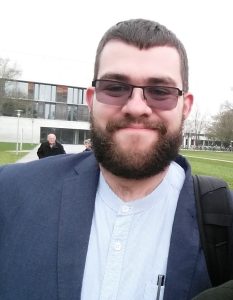
Dr Dean Irwin
Visiting Fellow in Anglo-Jewish Medieval History
My doctoral work, at Canterbury Christ Church University, examined the records generated by Jewish moneylending activities between 1194 and 1275/6. Now, working outside of conventional academia, I pursue my many esoteric interests into medieval Anglo-Jewish history. This work is undertaken as a Visiting Fellow at the University of Lincoln and, now, Visiting Fellow at the Oxford Centre for Hebrew and Jewish Studies (both in the historical diocese of Lincoln!).
At present, I am writing a book, under contract with Palgrave MacMillan, exploring Jews and Christians as Neighbours in the Towns of Medieval England (due 2027). Additionally, I am editing a volume of twelve essays on The Medieval Lincoln Jewry (Arc Humanities Press, due 2025), and co-editing Hebrew and Hebrew-Latin Documents from Medieval England, vol. 3, with Judith Olszowy-Schlanger. I speak regularly at national and international conferences, as well as organising panels, on all aspects of medieval Anglo-Jewish history, and have published a series of article length studies exploring acknowledgements of debt, the archae system, King John, and the social structure of the London Jewry. I also support community outreach programmes.
At the Oxford Centre for Hebrew and Jewish Studies, I co-convene a postgraduate seminar once a term with Judith Olszowy-Schlanger, looking at Medieval Anglo-Jewish Texts & History. Here we introduce postgraduate students to reading both Latin and Hebrew texts from medieval England. I also provide support to doctoral projects which fall within my area of specialism.

Dr Hillel Feuerstein
René & Susanne Braginsky Visiting Fellow in Manuscript Studies
I am a scholar of Jewish mysticism specializing in Zoharic literature, medieval manuscript cultures, the history of Kabbalah and codicology. I am currently a Postdoctoral Fellow in the Prism Project at Hamburg University, hosted by Prof. Dr. Patrick B. Koch.
My publications include an annotated critical edition of Sefer ha-Ne‘elam by R. Eleazar of Worms (Cherub Press, 2024), alongside articles in journals such as The Journal of Religion and Prooftexts.
I completed my doctoral studies in the Department of Jewish Philosophy at Bar-Ilan University under the supervision of Prof. Daniel Abrams. During my doctoral work, I was awarded a Minerva Stiftung fellowship and served as a visiting fellow at Freie Universität Berlin. I hold an M.A. in Jewish Thought from the Hebrew University of Jerusalem.
I serve as the Managing Editor of Pe‘amim: Studies in Oriental Jewry at the Ben-Zvi Institute.
Visiting Scholars
Visiting Scholars—senior scholars accepted by application to the Oxford Centre for Hebrew and Jewish Studies who come to Oxford to work on their current, independent research projects—are advised on how to apply for a Bodleian Readers Card to access the Bodleian Libraries as well as given access to shared office space in the Clarendon Institute. Visiting Scholars are invited and encouraged to attend and participate in the academic activities of the Oxford Centre for Hebrew and Jewish Studies, all of which are conducted in English. They may be invited to present a paper relating to their research should a suitable opportunity arise.
Individuals wishing to be academic visitors at the University of Oxford and obtain a University Card may apply to be affiliated with the Faculty of Asian and Middle Eastern Studies (AMES). For information, please email Trudi Pinkerton at trudi.pinkerton@ames.ox.ac.uk.
Current Visiting Scholars

Professor Gary Rendsburg
Visiting Scholar
I serve as the Blanche and Irving Laurie Chair in Jewish History and hold the position of Distinguished Professor in the Department of Jewish Studies at Rutgers University. My wide-ranging teaching and research interests include the Bible, ancient Israel, ancient Egypt, the Dead Sea Scrolls, medieval Hebrew manuscripts, and Jewish life in the Middle Ages. During my career, I have published seven books and c. 230 scholarly articles.
I have visited all the major archaeological sites of Israel, Egypt, and Jordan; I have also excavated at Tel Dor and Caesarea. I have produced lecture series for the Great Courses program; I have led tours in Israel, Egypt, and England; and I lecture regularly for Smithsonian Associates, Jewish Historical Seminars, the Biblical Archaeology Society, and other adult education venues.
I have done extensive research on medieval Hebrew manuscripts at leading libraries, including the Bodleian Library, the Cambridge University Library, the British Library, the Vatican Library, the Library of Congress, and the National Library of Israel.
At present, I am working on two major projects: a new dictionary of the Ugaritic language and a commentary on the book of Samuel for the JPS Bible Commentary Series, with the First Samuel volume scheduled to appear in November 2026. I plan to use my sabbatical term in Oxford to work on both these projects, in addition to reading selected Hebrew manuscripts housed at the Bodleian Library.

Dr David Segev
Visiting Scholar
My research lies at the intersection of the history of philosophy, Italian literary and intellectual history, Jewish Studies, philology, and religious history. My work combines the historical reconstruction of specific cultural contexts with close analysis of texts, focusing in particular on the presence, reception, and representation of Jewish sources, traditions, and figures within Italian intellectual and literary culture from the Renaissance to the modern period.
I hold a PhD in «Italian Language, Literature and Culture» from USI – Università della Svizzera italiana in Lugano, Switzerland. My doctoral research focused on Sisto da Siena and his Bibliotheca sancta, reconsidering the traditional portrayal of Sisto as a Jewish convert and questioning the extent of his actual knowledge of Jewish textual traditions.
I am currently completing a second PhD in «History and Cultural Heritage» at UNITUS – Università degli Studi della Tuscia in Viterbo, Italy. My current project focuses on Israel Zoller, Chief Rabbi of Rome, reconstructing the historical circumstances in which his choices were made, received, and subsequently narrated, with particular attention to Jewish identity, conversion, Holocaust memory, and Jewish-Christian relations.
Alongside these projects, I have pursued a broader range of research interests within these fields, publishing scholarly contributions and presenting papers at international conferences.
During my stay at the OCHJS, I will develop these interconnected strands of research through the Centre’s resources in Jewish history, rabbinic sources, Christian Hebraism, and Jewish-Christian relations.

Dr Felix Albrecht
Visiting Scholar
I am a Septuagint scholar and textual critic specialising in the Greek Bible and its manuscript traditions. Since 2020, I have led the research unit ‘Editio critica maior of the Greek Psalter’ at the Göttingen Academy of Sciences and Humanities in Lower Saxony. My research focuses on the Greek Psalter and the Twelve Prophets, Jewish Greek revisions, and the transmission of biblical texts across languages.
I received my doctorate in theology from the University of Göttingen in 2017, under the supervision of Professor Reinhard G. Kratz. My publications include the Göttingen critical edition of the Psalms of Solomon (2018) and, most recently, The Psalms of Solomon: A Textual and Theological Commentary (2026). I also prepared the supplement to the fourth edition of Alfred Rahlfs’ Psalmi cum Odis (2025) and am currently preparing a revised edition of the Twelve Minor Prophets for the Göttingen Septuagint.
At the Oxford Centre for Hebrew and Jewish Studies, I am studying the Bodleian Jonah, a Greek text of the Book of Jonah written in Hebrew script and preserved in a Romaniote prayer book. Through close study of the manuscript, I investigate its relationship to the Septuagint and its transmission and use within Jewish liturgy. The project also examines other Bodleian manuscripts relevant to the textual history of the Twelve Prophets, bringing together Septuagint scholarship, Jewish Greek biblical traditions and manuscript studies.
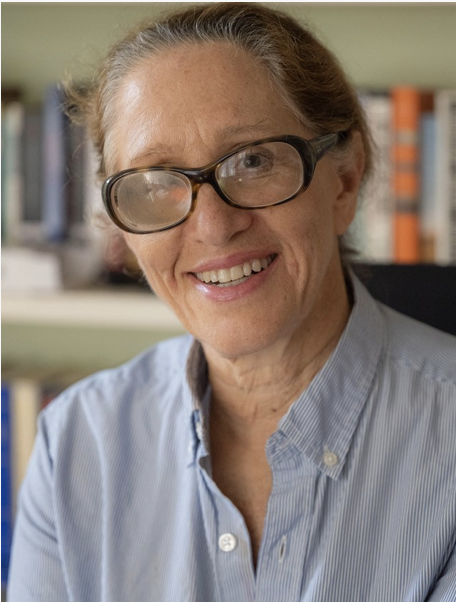
Dr Emily Rose
Visiting Scholar
I am a scholar of Medieval and Early Modern Europe; my work has been hailed as “a model of thoroughgoing historical scholarship presented to a general audience and should be studied by scholars who wish to bring the humanities to the public square.” A graduate of Oxford with an Honours degree in Modern History, I have taught British, European History and Jewish Studies at five universities.
My project at OCHJS examines “Expulsion (1290), Resettlement (1656), Celebration (1906): Jews of England and the Construction of a National Identity.” I am also studying a previously unknown German-Yiddish phrasebook from the early seventeenth century.
My first book, The Murder of William of Norwich: The Origins of the Blood Libel in Medieval Europe (Oxford University Press, 2015) was named one of the “Ten Best History Books of the Year” by the Sunday Times of London and described by the Wall Street Journal as “a landmark of historical research.” The American Historical Review called it “a significant achievement” and the AJS Review described it as “a truly excellent book. It deserves to be read and studied by scholars in many if not all fields of medieval studies.” It won the Ralph Waldo Emerson award from the Phi Beta Kappa Association and was awarded the 2017 Albert C. Outler Prize of the American Society for Church History for the best ecumenical church history monograph of the past two years.
I have also published on Christian-Jewish relations in late Antiquity, and on European politics and finance in the Early Modern world. My articles have appeared in Parliamentary History, the Huntington Library Quarterly, JEGP, and Studies in the Age of Chaucer among others. My most recent scholarship has appeared this year in Early American Studies and Viator. My essay on “Blood Libel, Crusades and Popular Violence” appeared in The Cambridge Companion to the History of Antisemitism (2022).
Junior Visiting Scholars
Individuals advanced in their doctoral or postdoctoral work may apply for Junior Visiting Scholar status at the Oxford Centre for Hebrew and Jewish Studies to carry out their own independent research. Junior Visiting Scholars are invited to attend and participate in the events and activities of the Oxford Centre for Hebrew and Jewish Studies (all of which are conducted in English) and will be advised as to how they may apply for a Bodleian Readers Card to access the Bodleian Library system. However, Junior Visiting Scholars are not permitted to participate in activities of the University of Oxford more broadly; those wishing to do so must apply for visiting student status separately through the University and at a cost.
Current Junior Visiting Scholars

Miss Ada Cattani
Junior Visiting Scholar
I am currently a PhD candidate in Italian Studies and Modern Philology at the Scuola Normale Superiore in Pisa, where I previously earned a Diploma in Ancient History and Classical Philology. Additionally, I hold a Bachelor’s degree in Classics and a Master’s degree in Oriental Studies from the University of Pisa.
My academic interests lie primarily at the intersection of Semitic studies, contact linguistics, and the history of translation. My earlier research has explored Greek-Semitic language interference in the New Testament, Hebrew-based glosses in Carolingian Bibles, Akkadian loanwords in Rabbinic Hebrew, and Judeo-Italian varieties.
At the OCHJS, I intend to further my doctoral research, which focuses on a late sixteenth-century Judeo-Italian translation of the Pentateuch. Specifically, I aim to produce a critical edition of this text, as well as to analyse its language and translation strategies, in order to situate it within the broader tradition of Judeo-Italian biblical translations.